

How to cook a steak properly: pan, oven or grill
Buy it thick, salt it early, sear it hot and trust a thermometer. Pan, reverse-sear and grill methods, with Health Canada’s doneness temperatures.
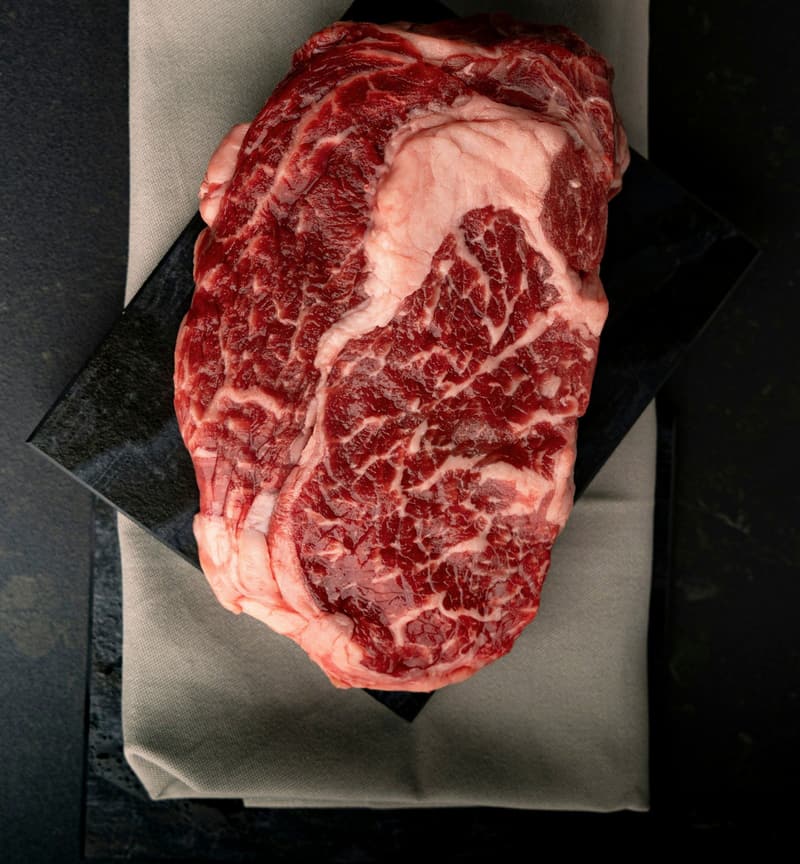
The short answer
Start with a steak 1¼ to 1½ inches (3 to 4 cm) thick, salt it at least 45 minutes ahead and pat it dry. Sear it in a very hot pan, turning often, and baste it with butter at the end. Take it off the heat a few degrees early, rest it 5 minutes and slice against the grain. Health Canada’s guidance for beef steak is 63°C (145°F) for medium-rare.
Most steak problems start at the counter, not the stove. A thin steak goes grey all the way through before it has a chance to brown. So start there.
Buy it thick
Ask for 1¼ to 1½ inches (3 to 4 cm). That gives you time to build a crust while the middle stays where you want it. We cut in-house, so we can cut your steak to that thickness. One thick steak shared between two beats two thin ones.
Salt it early, or right before
Salt first pulls moisture to the surface, then the meat draws that salty brine back in. Salt at least 45 minutes ahead and it has time to do both: seasoned inside, dry outside. Overnight is even better, uncovered on a rack over a plate in the fridge. Short on time? Salt it right before it hits the pan. The in-between, around 10 to 30 minutes, is the worst of both, with a wet surface that steams instead of browning. Use roughly 1 teaspoon of coarse kosher salt per pound (450 g).
The counter question
You’ll hear that a steak should sit out for an hour before cooking. It barely matters: an hour on the counter warms the centre only a few degrees. A dry surface matters much more. Take it out while the pan heats, pat it dry with paper towel and get going.
Pan-sear and butter-baste
- Heat a heavy pan, cast iron if you have it, over high heat until it just starts to smoke.
- Add a thin film of oil with a high smoke point, like canola.
- Lay the steak in, away from you. Turn it every minute or so. Frequent flipping cooks it more evenly and still builds a crust.
- With about 2 minutes to go, turn the heat to medium. Add 2 tablespoons of butter, a couple of smashed garlic cloves and a sprig of thyme or rosemary. Tilt the pan and spoon the foaming butter over the steak.
- Check the thickest part with a thermometer and pull the steak a few degrees before your target.
A 1¼-inch steak takes about 8 to 10 minutes all in. For a ribeye or striploin, stand it on its fat edge for a minute first to render the fat.
Reverse sear for thick steaks
For steaks 1½ inches (4 cm) and up, cook slow first and sear last. Set the salted steak on a rack over a baking sheet in a 250°F (120°C) oven until it’s about 8°C (15°F) below your target, usually 30 to 45 minutes. Then sear it in a smoking-hot pan for about a minute a side, plus the edges, and check the temperature once more. You get even colour from edge to edge and almost no grey band.
On the grill
Set up two zones: high heat on one side, low or off on the other. Sear over the hot side, turning every minute or two, then move the steak to the cool side with the lid down to finish. Thick steaks can go reverse-sear style: cool side first, hot side last.
Rest and slice
Give a pan-seared or grilled steak about 5 minutes on a board. A reverse-seared steak barely needs it. Then slice against the grain: find the lines of muscle running through the meat and cut across them, not along them. Every steak eats more tender that way. On flank, skirt and sirloin, it’s the difference between tender and chewy.
Doneness temperatures
Health Canada’s guidance for beef steaks and roasts:
- Medium-rare: 63°C (145°F), Health Canada’s minimum for steak
- Medium: 71°C (160°F)
- Well done: 77°C (170°F)
Rare, around 52°C (125°F), sits below the government guideline. Plenty of people eat it that way anyway. It’s your steak and your call.
A steak keeps climbing a few degrees as it rests, so take it off the heat about 3°C (5°F) early. And if a package says mechanically tenderized, Health Canada says to cook it to at least 63°C (145°F) and turn it at least twice.
Not sure which cut to buy? Start with Which steak should I buy?
Questions
How thick should a steak be?
1¼ to 1½ inches (3 to 4 cm) is ideal for the pan or the grill. Ask at our butcher counter and we’ll cut it to the thickness you want.
What temperature is medium-rare steak?
Health Canada’s guidance for medium-rare beef is 63°C (145°F), which is also its minimum for steak. Lots of people like theirs pinker than that. That sits below the guideline, so it’s your call.
How long should I rest a steak?
About 5 minutes for a pan-seared or grilled steak. A reverse-seared steak barely needs any rest.
Should I let steak come to room temperature first?
It makes less difference than you’d think: an hour out only warms the centre a few degrees. Patting the steak dry and getting the pan properly hot matter much more.
Food-safety temperatures: source 1 (Health Canada).