

Which steak should I buy? Ribeye, striploin, sirloin and more
Ribeye for richness, striploin for a beefy bite, tenderloin for tenderness, sirloin for value. How each steak eats and how to cook it.
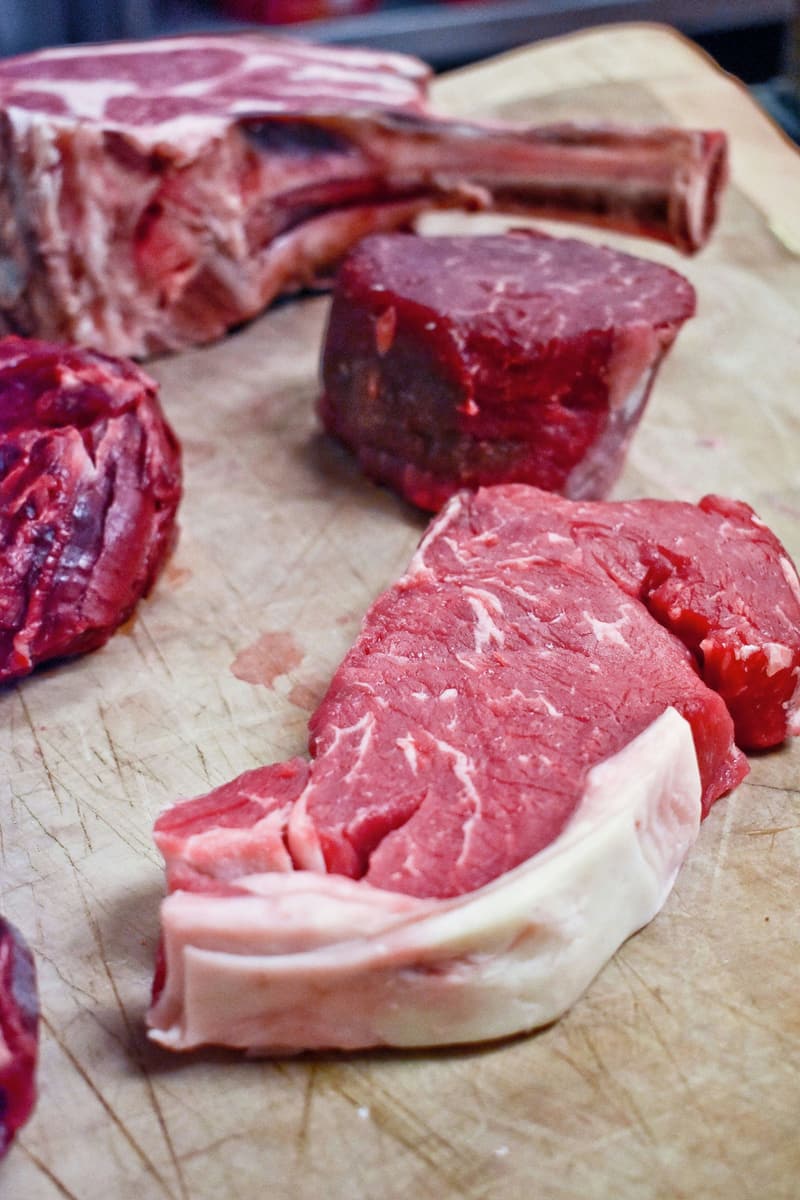
The short answer
Buy a ribeye for a rich, juicy steak, or a striploin for a firmer, beefier bite. Tenderloin is the most tender and the mildest. Top sirloin and flat iron are good value, and flank and skirt are big-flavour cuts for hot, fast cooking and thin slicing against the grain.
Every steak trades tenderness against flavour, and both against price. Here are the usual suspects, one at a time.
Ribeye
Cut from the rib, the same muscle as prime rib. Well marbled, with a pocket of fat in the middle and the cap, the crescent of meat along the top that people fight over. It’s rich and forgiving: the fat keeps it juicy if you overshoot a little. Best in a hot pan or on the grill. Ask for bone-in or boneless, 1¼ to 1½ inches (3 to 4 cm) thick.
Striploin (New York strip)
From the short loin, just behind the rib. Tighter grain and a firmer chew, with a strip of fat down one edge. Beefier and a little leaner than a ribeye, and its even shape makes it easy to cook. Great on the grill. In a pan, stand it on the fat edge for a minute first to render it.
Tenderloin (filet)
The most tender cut on the animal, and one of the leanest. Mild and buttery, in small portions. There’s no fat to protect it, so don’t take it past medium. Sear it hard and finish thick pieces in the oven. Ask for centre-cut pieces so they cook evenly, and give it a pan sauce or a pat of butter to make up for the lean.
Top sirloin
A lean, beefy steak at a good price. Firmer than the loin steaks. Grill it or pan-sear it to medium-rare or medium, then slice it thin against the grain. It’s the go-to for kebabs and steak salads, too.
Flat iron
From the shoulder blade. Well marbled and surprisingly tender for the price. Making it means trimming out a tough line of gristle that runs through the middle of the muscle, so not every butcher case has it. Ask us. Cook it in a hot pan or on the grill and slice against the grain.
Flank and skirt
The flavour cuts. Flank is lean, with a long, obvious grain. Skirt is thinner and fattier, with even more beefy flavour. Both want high heat and speed: a few minutes a side, and no further than medium. Slicing is everything with these two. Cut thin, across the grain, or they chew like a belt. With skirt, cut it into pieces a hand’s width wide first, then turn each one and slice across. Both take a marinade well, and both are made for fajitas and steak sandwiches.
T-bone and porterhouse
Two steaks in one: striploin on one side of the T-shaped bone, tenderloin on the other. A porterhouse is cut from the end with a bigger piece of tenderloin. The catch is that the tenderloin side cooks faster, so keep it toward the cooler part of the pan or grill. Buy one thick one, cook it, slice both sides and put it in the middle of the table.
What to ask at the counter
We cut our meat in-house, so a few questions go a long way:
- Thickness. Ask for 1¼ to 1½ inches (3 to 4 cm) for the pan or grill.
- How many you’re feeding. Figure 6 to 8 oz (170 to 225 g) of boneless steak per person, a bit more for bone-in. One thick steak can feed two.
- How you’re cooking it. Grill, pan or smoker changes what we’d suggest.
- Anything not in the case. Ask. We’re always happy to customize an order.
Whatever you pick, a thermometer beats guesswork. Health Canada’s guidance for beef steak is 63°C (145°F) for medium-rare. Then read up on how to cook a steak properly.
Questions
What’s the difference between a ribeye and a striploin?
A ribeye comes from the rib and has more marbling, so it’s richer and juicier. A striploin comes from the short loin, with a tighter grain, a firmer bite and a strip of fat down one side.
What’s the most tender steak?
Tenderloin, also called filet. Flat iron comes close for a lot less money, when you can get it.
How much steak do I need per person?
About 6 to 8 oz (170 to 225 g) of boneless steak per person, a bit more for bone-in. One thick steak can easily feed two.
Can I ask for a cut that isn’t in the case?
Yes. We cut in-house and we’re always happy to customize an order. Call 519-846-8600 or send a pre-order request and we’ll let you know what we can do.
Food-safety temperatures: source 1 (Health Canada).