

Scallops and shrimp: how to thaw, sear and cook them
Thaw them in the fridge or in cold water, pat them dry, then cook them hot and fast: about 3 to 4 minutes for scallops, 2 to 3 for shrimp.
The short answer
Thaw frozen scallops and shrimp overnight in the fridge, or sealed in a bag in cold water. Pat them very dry. Sear scallops in a very hot pan without moving them for about 2 minutes, then 1 to 2 minutes after the flip. Shrimp need 2 to 3 minutes, until pink and opaque. Health Canada’s safe internal temperature for shellfish is 74°C (165°F).
Scallops and shrimp cook in minutes. That’s the good news and the bad news: a minute too long and they turn rubbery. Get them dry, get the pan hot and don’t wander off.
What the count means
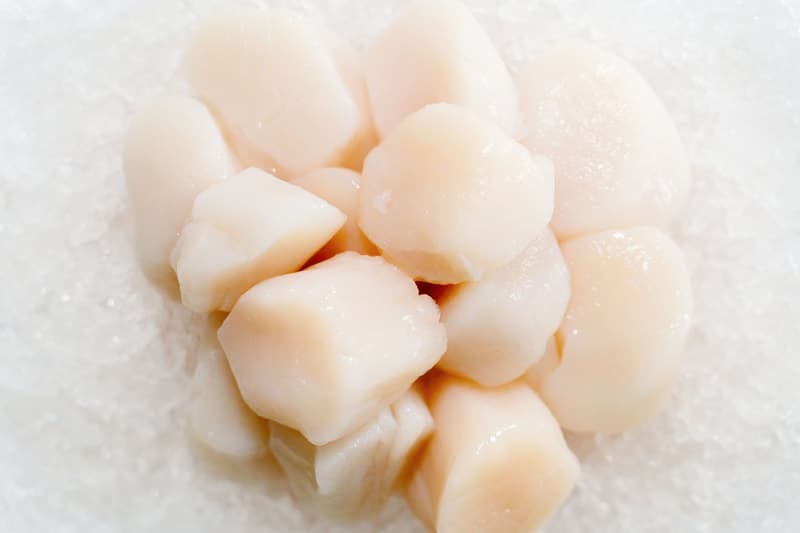
The count is how many there are in a pound (450 g). The lower the number, the bigger each piece. The sea scallops in our seafood case are 20–30 count, each about the size of a big marshmallow. Our black tiger shrimp are 21–25 count, a meaty size that’s good on the grill or in the pan.
For a main course, figure about 6 oz (170 g) per person. That’s roughly 8 to 10 of those scallops, or 8 or 9 shrimp. As a starter, 3 or 4 each.
Thawing
- Overnight in the fridge. The best way. Spread them on a plate, cover them and put them on the bottom shelf.
- In cold water. Seal them in a leak-proof bag, sink it in cold water and change the water every 30 minutes. Shrimp and scallops thaw fast this way, usually in under an hour.
- Never on the counter, and never in warm water.
Cook them soon after they’re thawed. Health Canada’s storage chart gives raw scallops and shrimp 1 to 2 days in the fridge.
Pat them dry. Really dry.
A wet scallop steams instead of browning. Lay them on paper towel, press more on top and give them 10 minutes if you can. If a scallop still has its side muscle, the small, tough tab on one edge, peel it off.
Searing scallops
- Heat a heavy pan over high heat until it’s very hot, then add a thin film of oil.
- Salt the scallops just before they go in.
- Lay them in flat side down, one at a time, with space between them. A crowded pan steams them.
- Don’t move them. Leave them about 2 minutes, until a deep golden crust lets go of the pan on its own.
- Flip, add a knob of butter and cook 1 to 2 minutes more, spooning the butter over.
They’re done when they’re opaque all the way through and feel springy, not squishy.
Cooking shrimp
Shrimp take 2 to 3 minutes in a hot pan or on the grill, turning once. Watch them go from grey and see-through to pink and opaque. They curl as they cook: a loose C is done, a tight O is overdone. On the grill, run two skewers through each row so they don’t spin when you flip them. Shell-on shrimp stay juicier on the grill, and peeled ones soak up garlic butter better.
Bacon-wrapped scallops and coconut shrimp
Both are made for the oven or the air fryer. If the package has directions, follow them. If not:
- Bacon-wrapped scallops: on a rack over a foil-lined tray at 400°F (200°C) for 15 to 20 minutes, turning once, until the bacon is crisp. Give them a few minutes more from frozen. In the air fryer, 390°F (200°C) for 10 to 12 minutes.
- Coconut shrimp: 400°F (200°C) for 10 to 15 minutes, flipping halfway, until golden. In the air fryer, 8 to 10 minutes.
How hot is done?
Health Canada’s safe internal temperature for shellfish is 74°C (165°F), and for fish it’s 70°C (158°F). Restaurants often serve scallops with a translucent centre. That’s below the guideline, so it’s your call.
Smoked salmon: no cooking needed
Smoked salmon is ready to eat. A few ways to use it:
- On a bagel or dark rye with cream cheese, capers, thin red onion and dill
- Folded into soft scrambled eggs at the very end, off the heat
- On cucumber rounds with sour cream and lemon, for a party
- Tossed through hot pasta with cream, lemon and peas
Or let us do the work: our salmon dip is in the deli.
One note from Health Canada: people who are pregnant, children 5 and under, adults 60 and over and anyone with a weakened immune system should skip refrigerated smoked seafood (canned or shelf-stable is the safer choice) and stick to seafood cooked to 74°C (165°F).
Questions
What does 21–25 count shrimp mean?
There are 21 to 25 shrimp in a pound (450 g). The lower the count, the bigger the shrimp. 21–25s are a good size for the grill or a hot pan.
Do I need to thaw scallops before cooking?
For searing, yes. A frozen scallop can’t brown before it overcooks. Thaw them overnight in the fridge, or sealed in a bag in cold water, changing the water every 30 minutes.
How do I know when scallops are done?
They turn opaque all the way through and feel springy. Health Canada’s safe internal temperature for shellfish is 74°C (165°F).
Why are my scallops rubbery?
Usually they spent too long in the pan, or the pan wasn’t hot enough and they stewed. Dry them well, get the pan very hot and give them room.
Food-safety temperatures: source 1, source 2, source 3, source 4, source 5 (Health Canada).